

)
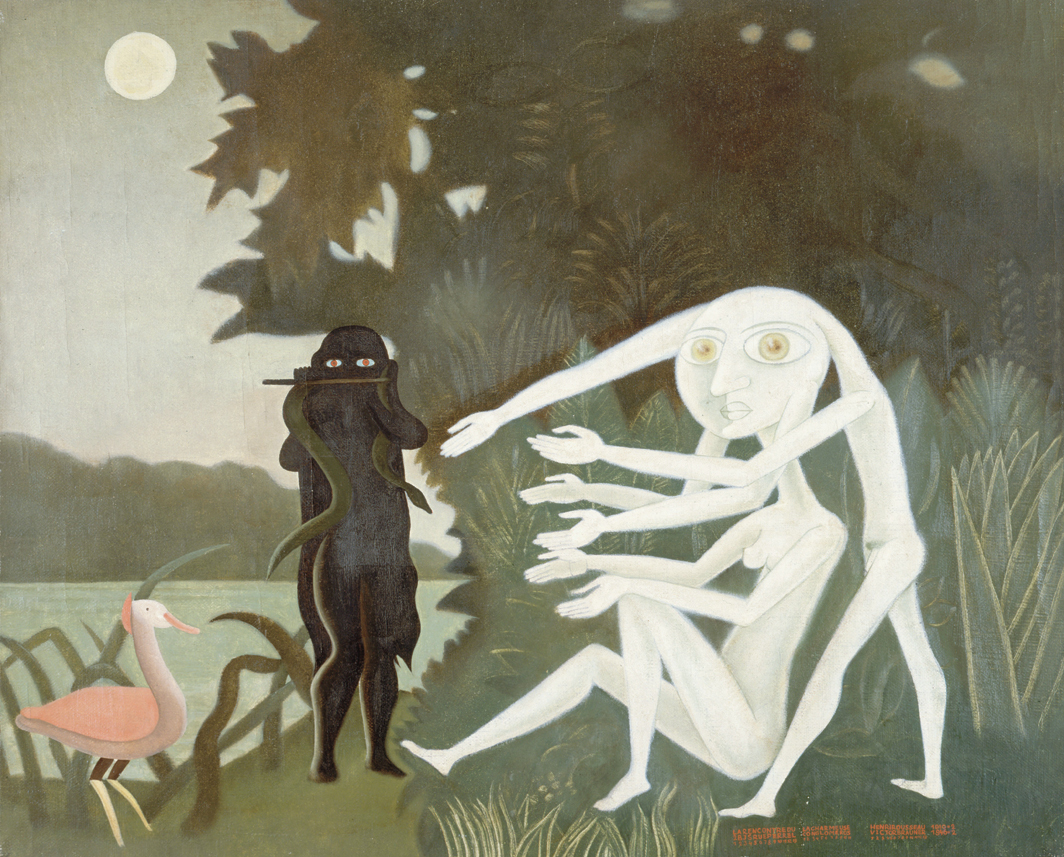
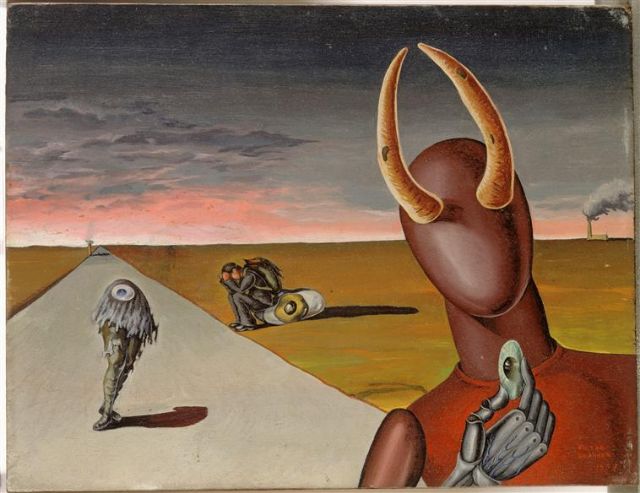
Brauner was an active member of the surrealist group and participated in numerous international art exhibitions, including the 1936 surrealist art exhibition, "Exposition surréaliste d'objets," in Paris. His works are characterized by a solid technique, as well as bizarre and provocative themes, such as hybrid animals, fantastical figures, and surrealist symbols. Brauner had a significant influence on the evolution of surrealism, and some of his works are considered to be unique in this style. For example, "La Main coupée" (1938) is a painting in which a human hand floats in space, symbolizing the separation between mind and body. In 1953, Victor Brauner suffered a severe accident that led to the loss of one eye. This event had a major impact on his life and art, and Brauner continued to work until 1966, when he died of a heart attack.


Victor Brauner was less well-known in Romania compared to his appreciation abroad. After emigrating to Paris in 1930, Brauner began to be recognized in the European art world and his works were included in important contemporary art exhibitions. Although he had a significant influence on the evolution of Surrealism, his works were ignored or even criticized in Romania during the Communist period, and his name was not widely known in the country. It was only after the fall of the Communist regime in 1989 that Victor Brauner began to be recognized and appreciated in Romania, and his works were included in exhibitions and brought to the public's attention. Today, Victor Brauner is recognized as one of the most important Surrealist artists of the 20th century, and his works are appreciated both in his country of origin and around the world. I hope this blog gave you an overview of the life and work of Victor Brauner.


Sos Constantei, nr.2
Mangalia, Jud. Constanta
Strada Veronica Micle, nr. 20
Bucuresti, Sector 1
